

The 3 Bleeding Edge Trends Actually Moving the Needle in Application Modernization
Explore Our Latest Insights



The 3 Bleeding Edge Trends Actually Moving the Needle in Application Modernization
KEY TAKEAWAYS
- AI-native refactoring allows you to shift spending from keeping the lights on to building a true competitive moat.
- AI generates code faster than humans can test it; the only way to keep pace is moving from brittle manual scripts to Intent-Driven testing that validates business logic.
- Moving to event-driven architectures slashes latency and turns your infrastructure into a responsive, intelligent organism.
The term digital transformation has been beaten into a pulp. For years, we’ve been told that moving your legacy mess from a dusty server room to a shiny cloud provider was the finish line. But as we navigate 2026, the harsh reality has set in. Many of those lift and shift projects from the early 2020s didn't actually transform anything; they just relocated your technical debt to someone else’s data center.
The global landscape of enterprise technology in 2026 is no longer defined by that binary choice between legacy maintenance and cloud migration. Instead, we are seeing a fundamental shift toward AI-native systems. These aren't static artifacts; they are living, evolving entities that treat software as a dynamic organism rather than a frozen piece of logic.
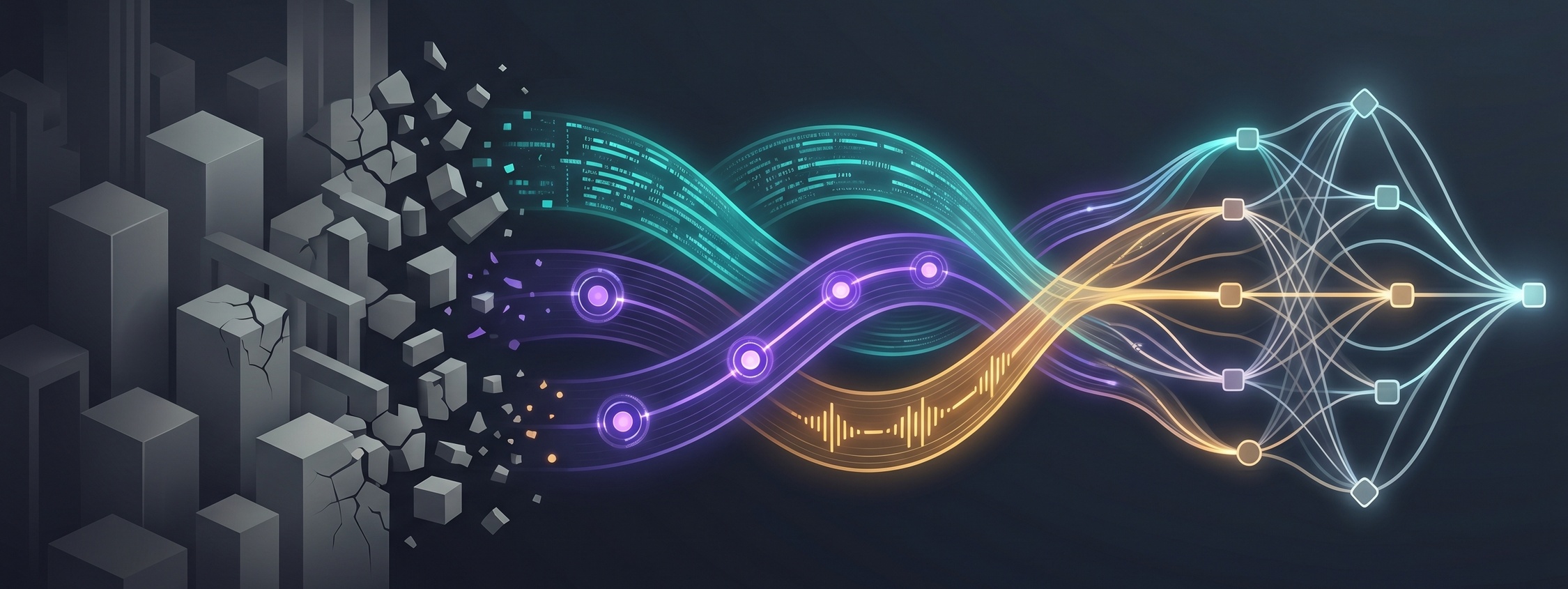
If you are a CIO or a VP of Engineering, you already know the problem: legacy technology is currently a massive drain on your IT budget through technical debt. That is a staggering innovation tax to pay just to keep the lights on. To stop paying that interest and start building a real competitive moat, you need to understand the three technical undercurrents actually moving the needle today: AI-native refactoring, autonomous testing at scale, and real-time data context.
AI-Native Refactoring: From Chatting to Deep Mechanical Evolution
For the last couple of years, we’ve treated AI in coding like a glorified autocorrect. You’d ask a chatbot for a snippet of Python, copy-paste it, and hope for the best. That was AI-assisted. In 2026, we’ve graduated to AI-native refactoring.
We aren't just tweaking code; we are performing deep, structural transformations across entire codebases. This is the process of restructuring and optimizing existing software to improve quality and maintainability without breaking the external functionality.
The Engine Under the Hood: ASTs and LSTs
How does the hot dog actually get made here? Modern refactoring tools use Abstract Syntax Trees (AST) and Lossless Semantic Trees (LST) to represent your code.
- ASTs allow the AI to parse your code hierarchy into vector embeddings that neural networks can manipulate to ensure the new code still compiles correctly.
- LSTs go a step further by preserving style formatting and type information, which is essential for safer semantic searches and large-scale framework migrations.
We are also seeing the rise of Reinforcement Learning (RL) to train these models. By measuring execution times and unit test pass rates, the AI learns which code transformations lead to the greatest reward in terms of quality. This has birthed deterministic automation tools like OpenRewrite and Moderne, which allow teams to accelerate upgrades across thousands of repositories in parallel.
The Shift to Long-Running Engineering Agents
The real bleeding edge is the move toward autonomous workflows. We’ve moved past pair programming into the era of autonomous AI teams. Tools like Devin or GitHub coding agents can now take a GitHub issue, explore the repository, implement a multi-file feature, run tests, and open a complete pull request, all without human intervention.
The ROI here isn't just faster coding. It’s about flipping the script on your budget. High-performing organizations have managed to flip their ratios so that the vast majority of their resources go toward innovation rather than simple maintenance.
Intent-Driven Testing: Closing the Velocity Gap
If AI can now generate a million lines of code in the time it takes you to read this paragraph, your manual QA process has effectively become the world’s most expensive speed bump.
This is the Velocity and Quality Gap. Traditional QA, which focused on pre-release verification, has been replaced by a continuous, AI-driven discipline integrated across the entire software lifecycle.
Moving from Scripts to Business Logic
The most significant shift here is Intent-Driven Testing. For decades, we’ve been writing brittle, hand-coded scripts that specify every click and browser combination. In 2026, we are moving toward systems that autonomously turn business intent into self-improving test suites.
Agents like Sauce AI can now scan application workflows or interpret designs in Figma to generate optimized test scenarios from plain English descriptions. This approach has allowed teams to increase automated test case generation speed by over 90% while eliminating traditional blind spots in the user journey.
The End of the Maintenance Trap
We’ve all seen it: a team spends nearly half their week just fixing flaky tests or updating legacy scripts. This is the Maintenance Trap. In the current landscape, self-healing AI agents have become standard. These agents detect UI changes or architectural shifts and automatically update test steps, preventing the failures that historically halted CI/CD pipelines.
When testing scales alongside rapid modernization without a proportional increase in headcount, you’ve achieved true velocity.
Real-Time Data Context: The Intelligent Foundation
The third pillar of the 2026 modernization strategy is the use of real-time data context. Business leaders have learned a painful lesson: AI agents are only as effective as the data context they can access. If your data is trapped in slow, batch-processing silos, your intelligent systems will be consistently out of date.
Event-Driven Architecture (EDA) as the Backbone
We are seeing a massive migration away from traditional request-response (polling) architectures toward Event-Driven Architecture (EDA). In this model, systems communicate through the production and consumption of discrete events, immutable records of state change.
Why does this matter for AI? Because polling forces agents to consume compute even when nothing has changed. Research indicates that EDA can reduce AI agent latency by 70% to 90%, allowing for real-time responsiveness in areas like fraud detection and dynamic pricing. Using an event bus like Apache Kafka creates a linear connection complexity, making it practical to operate systems with hundreds of specialized AI agents.
The Rise of Unified Multi-Model Context Engines
In the past, building an AI-powered app required stitching together a vector database for search, a graph database for relationships, and a relational store for transactions. It was a plumbing nightmare.
In 2026, unified engines like SurrealDB treat these as native primitives within a single ACID transaction boundary. This is the structural fix for modernization failures. It prevents context leaks, eliminates partial writes that lead to AI hallucinations, and drastically reduces the network round trips that historically slowed down AI responses.
The Pivot From Microservices to Modular Monoliths
The industry treated microservices like a Swiss Army knife; convinced that if you added enough specialized blades, you could solve any problem, only to realize that sometimes you just need a sturdy, reliable chef’s knife to get the job done.
In 2026, the one-size-fits-all approach to microservices is over. While they offer scalability, the division of tasks across hundreds of services often impacts performance.
The pragmatic move today is toward Modular Monoliths. This approach uses a shared database with schema-level isolation and clear module boundaries. You get the transactional guarantees of a monolith with the modularity required by AI-assisted development. It’s about being architected for independent evolution and AI-ready data flows, not just making services as small as possible.
Building Your AI Framework
The most successful modernization strategies are now built around an AI Framework. Think of it as a Grandmaster’s playbook that has memorized every move your organization has ever made. It’s a structured collection of your internal DNA that ensures your AI agents are following your specific naming conventions and architectural decisions rather than just making up their own rules.
When modernization is conducted through this framework, improvements to a single security rule benefit every developer and agentic tool across the organization immediately.
The Economic Reality: Modernization vs. Migration
Why are these trends moving the needle now? Because the ROI math has changed. While Re-hosting (the classic Lift & Shift) can reduce upfront migration costs, true Re-factoring (Modernization) delivers significantly better ROI over time.
We’ve seen enterprises waste massive sums annually on compute overprovisioning because they moved legacy apps to the cloud without fixing the underlying architecture. Modernized applications, by contrast, use far fewer compute resources. But the real win is in Innovation Velocity, moving from quarterly feature deployments to weekly cycles.
The Dual Leader Advantage
There is now a stark gap between companies that “buy AI” and those that build a foundation. Organizations that score as dual leaders on both AI measurement and infrastructure returned significantly higher value over twelve months compared to the broader market. If you fail to modernize your legacy foundations before adding AI, your AI pilots will likely see zero measurable P&L impact.
Navigating the Risks of the AI-Native Era
While the impact of these trends is profound, they introduce new risks. The AI-Generated Code Tsunami can lead to widespread vulnerability introduction and a rapidly evolving threat landscape.
The solution is a governance-first approach. In 2026, sovereign AI strategies rely on Infrastructure as Code (IaC) to coordinate deployments, with governance taking priority over raw performance. Organizations are embedding security throughout the cycle, using AI-powered PR review agents to check for logic flaws before code is ever merged.
Mastering the Strategy for 2026
The real impact in 2026 is not from chasing the latest model or the most popular buzzword. It is coming from the mastery of strategies that fundamentally alter the cost and speed of digital transformation.
By integrating AI-native refactoring, autonomous testing, and real-time context into a unified roadmap, you can stop paying the technical debt interest that has crippled innovation for decades.
Is your application architecture ready for the future, or are you still just moving your technical debt to the cloud? Let’s talk about building a foundation that actually scales.